The design board your agent draws on
Your agent writes each screen as a plain HTML file. Frameboard shows it the moment the file lands, and you review it and tweak it by hand.
npx frameboard serve
From a file to a screen you signed off
One take per step, playing beside the step you are reading.
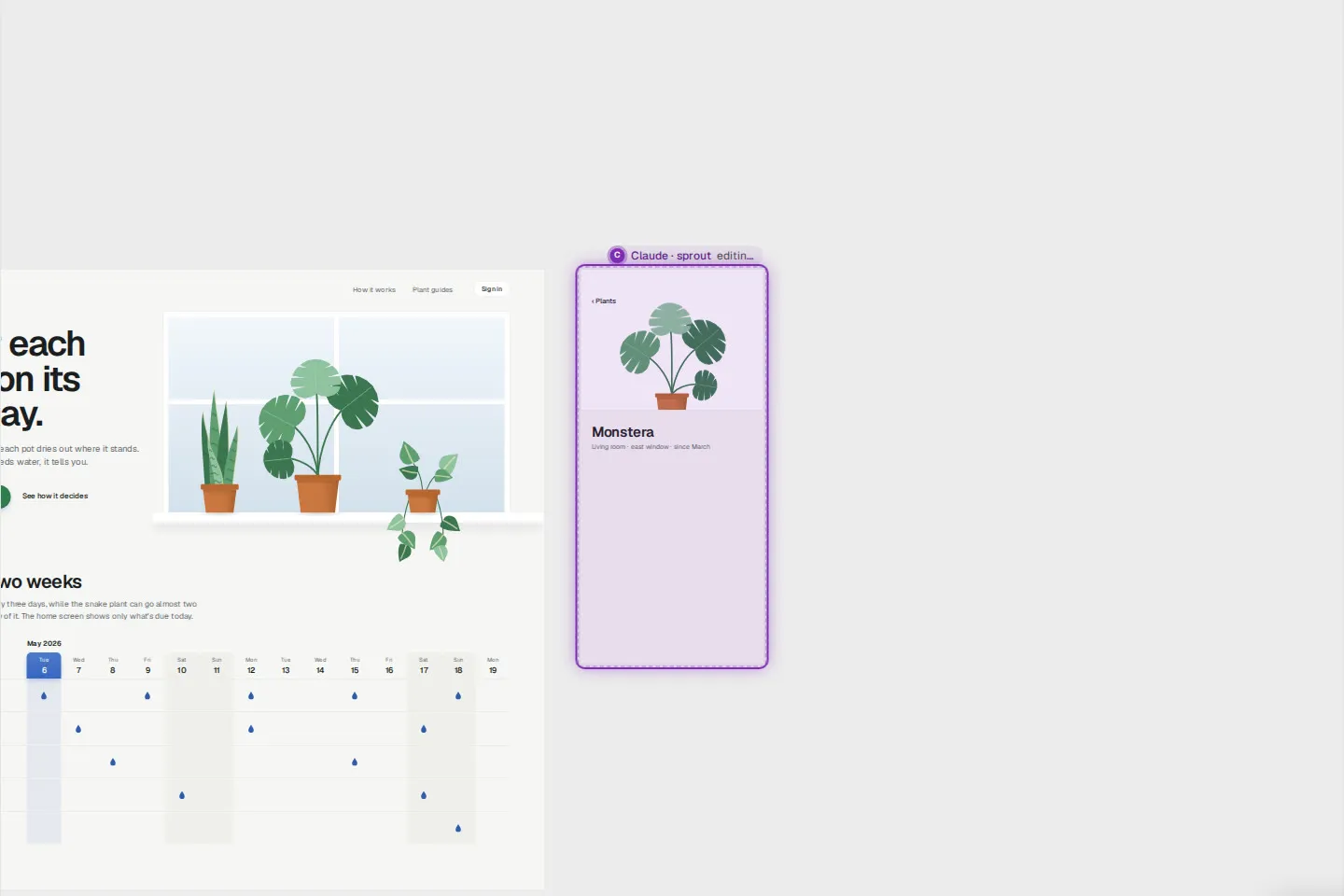
Every frame is a plain HTML file
The moment your agent writes one, it is on the board, so it draws with the tools it already has.
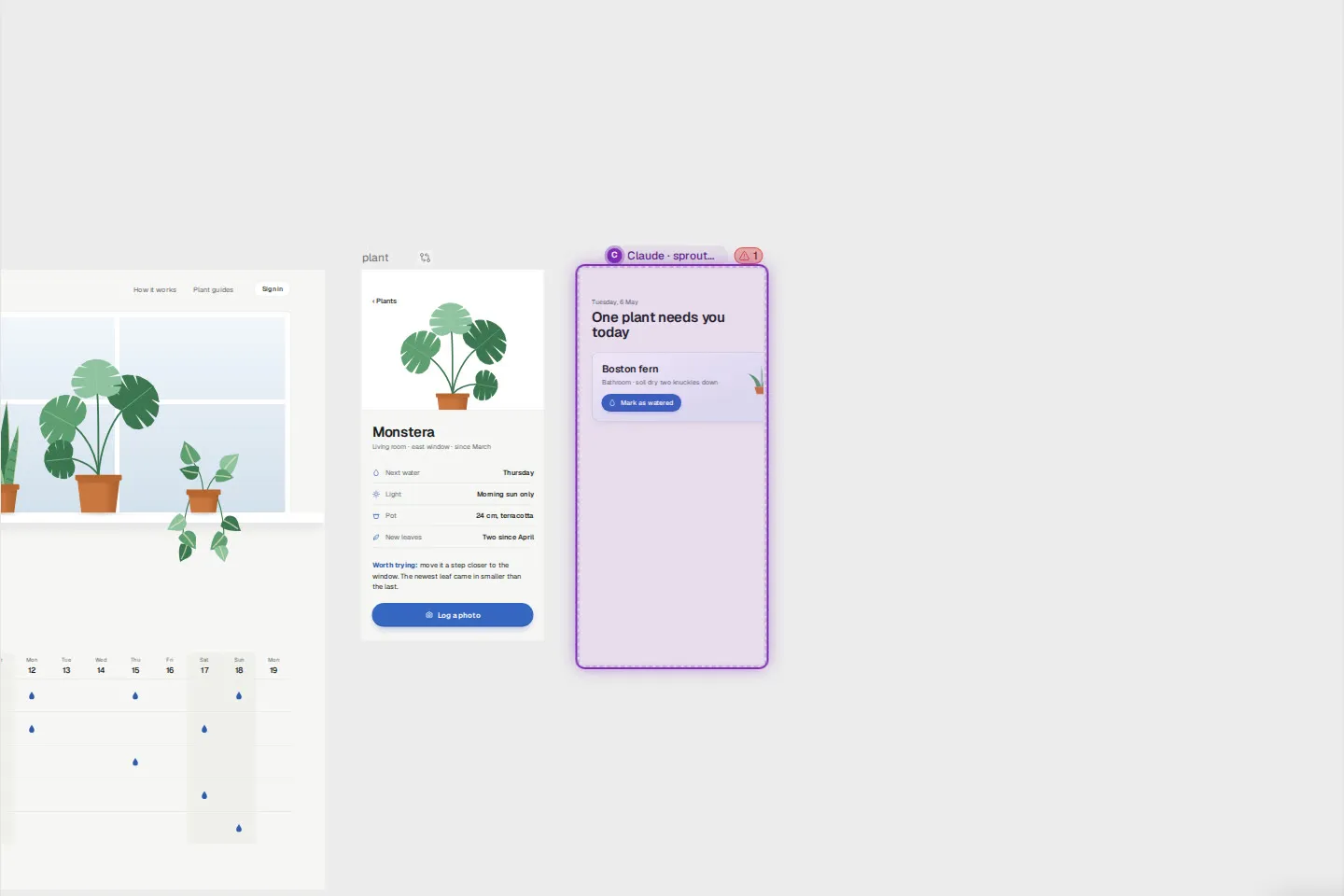
Break a rule, and the agent hears at once
Clipped text, a missing font, or a color set for one theme only is flagged on the frame and reported to the agent that wrote it.
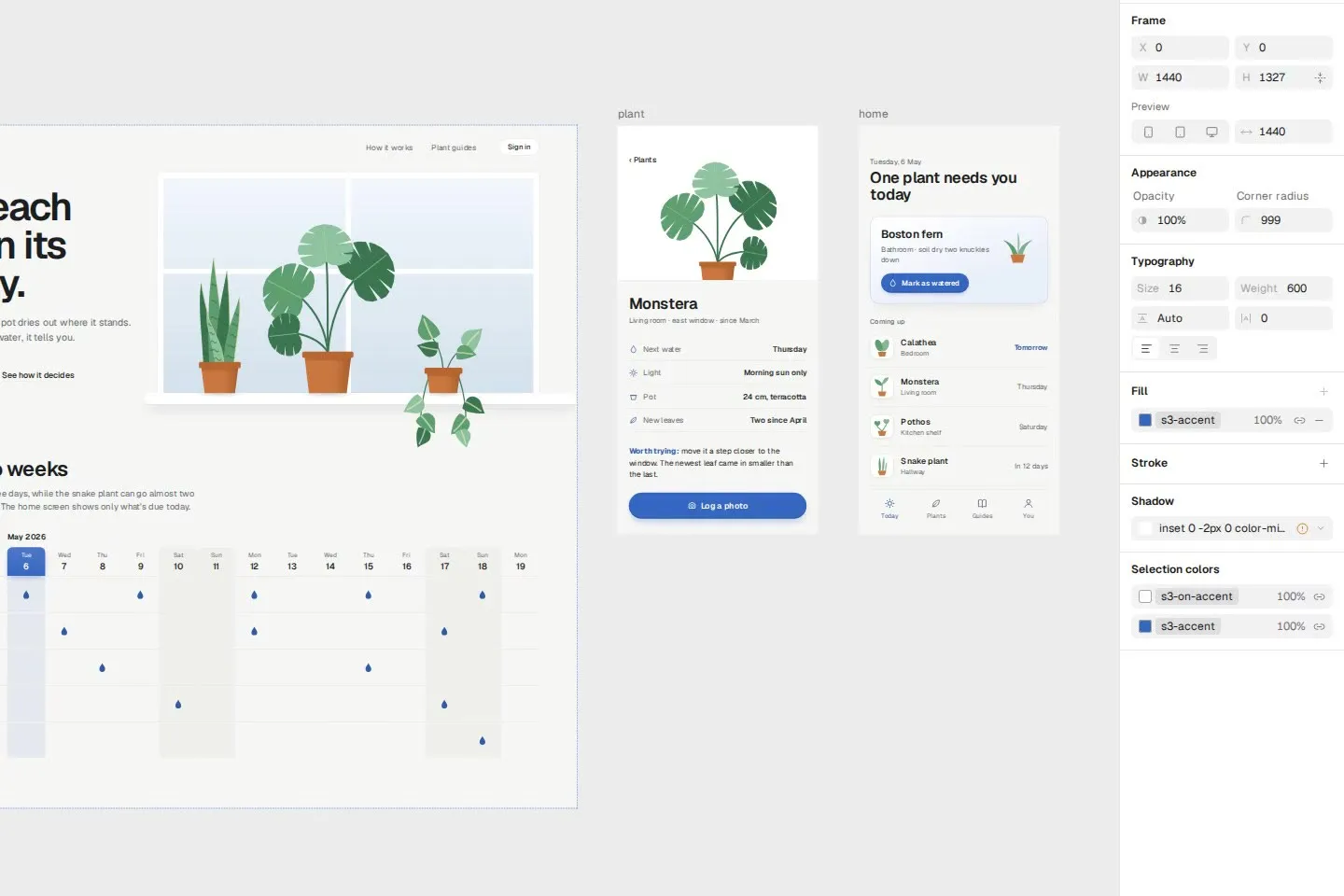
Small things, you just fix
Change text, color, and type by hand, picking colors from your own tokens. Only what you touch changes.
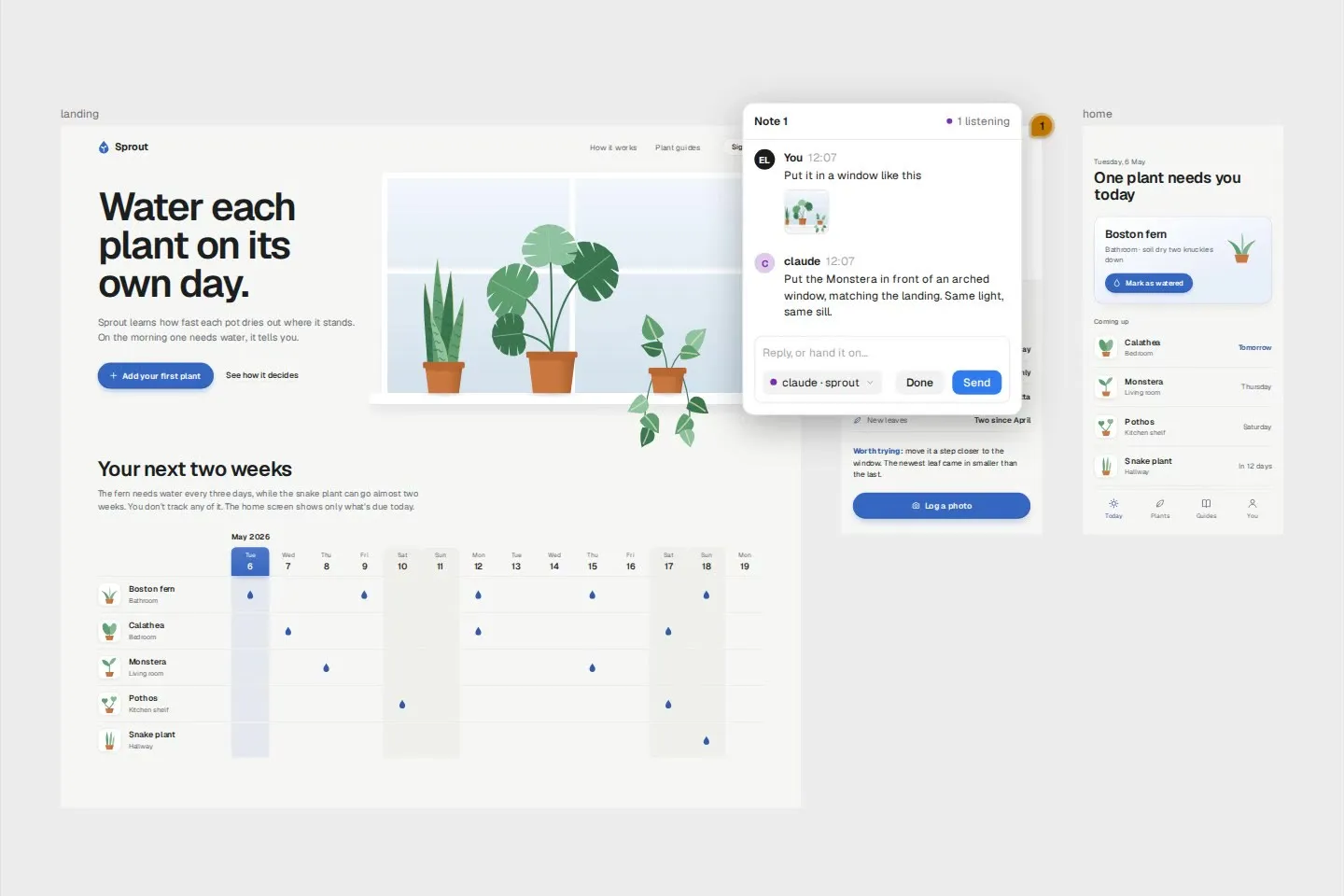
Bigger things, you ask
Pin a note on a frame or an element, and it reaches your agent straight away. Its reply lands in the thread.
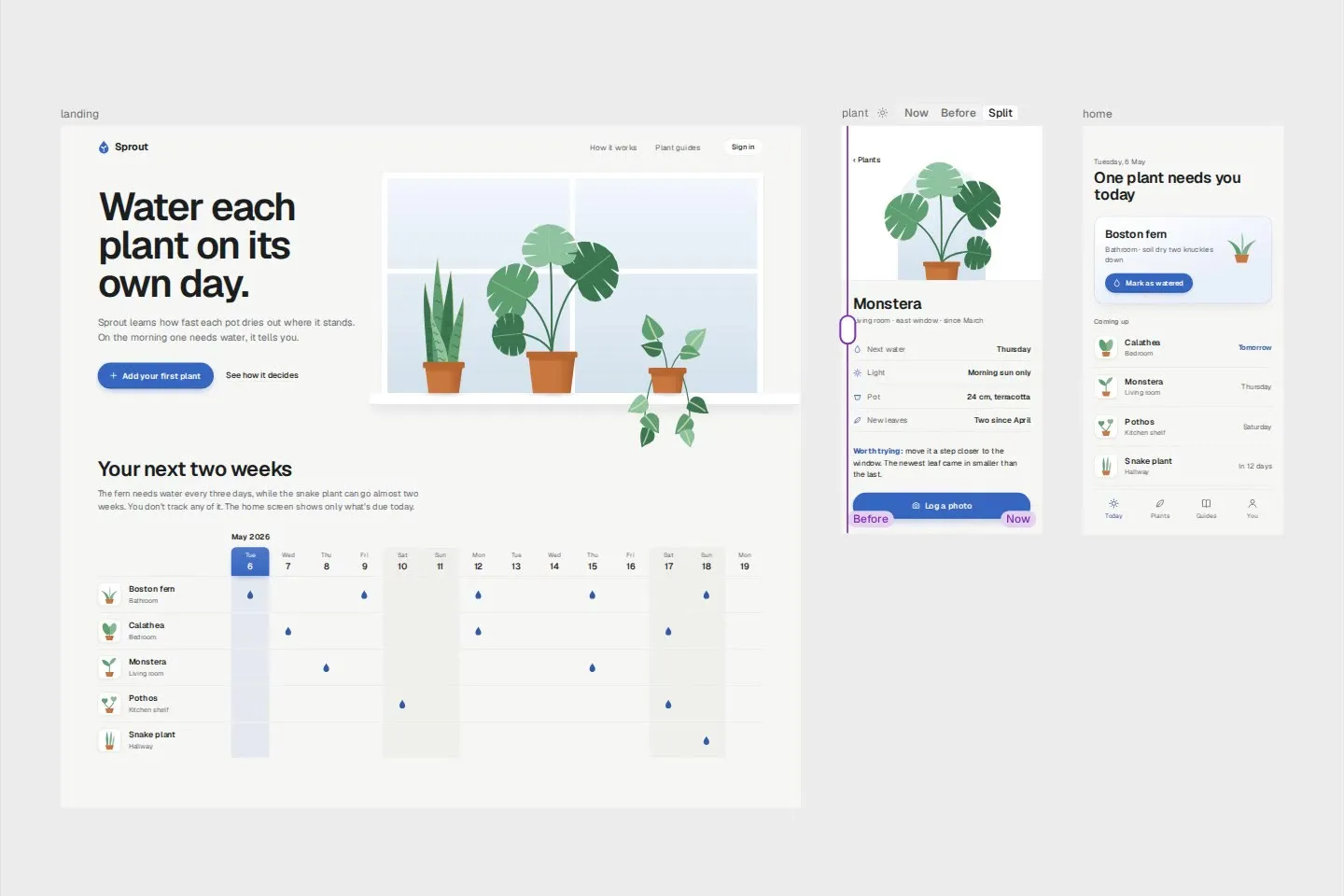
See exactly what it changed
Compare a frame with the version before the agent touched it.
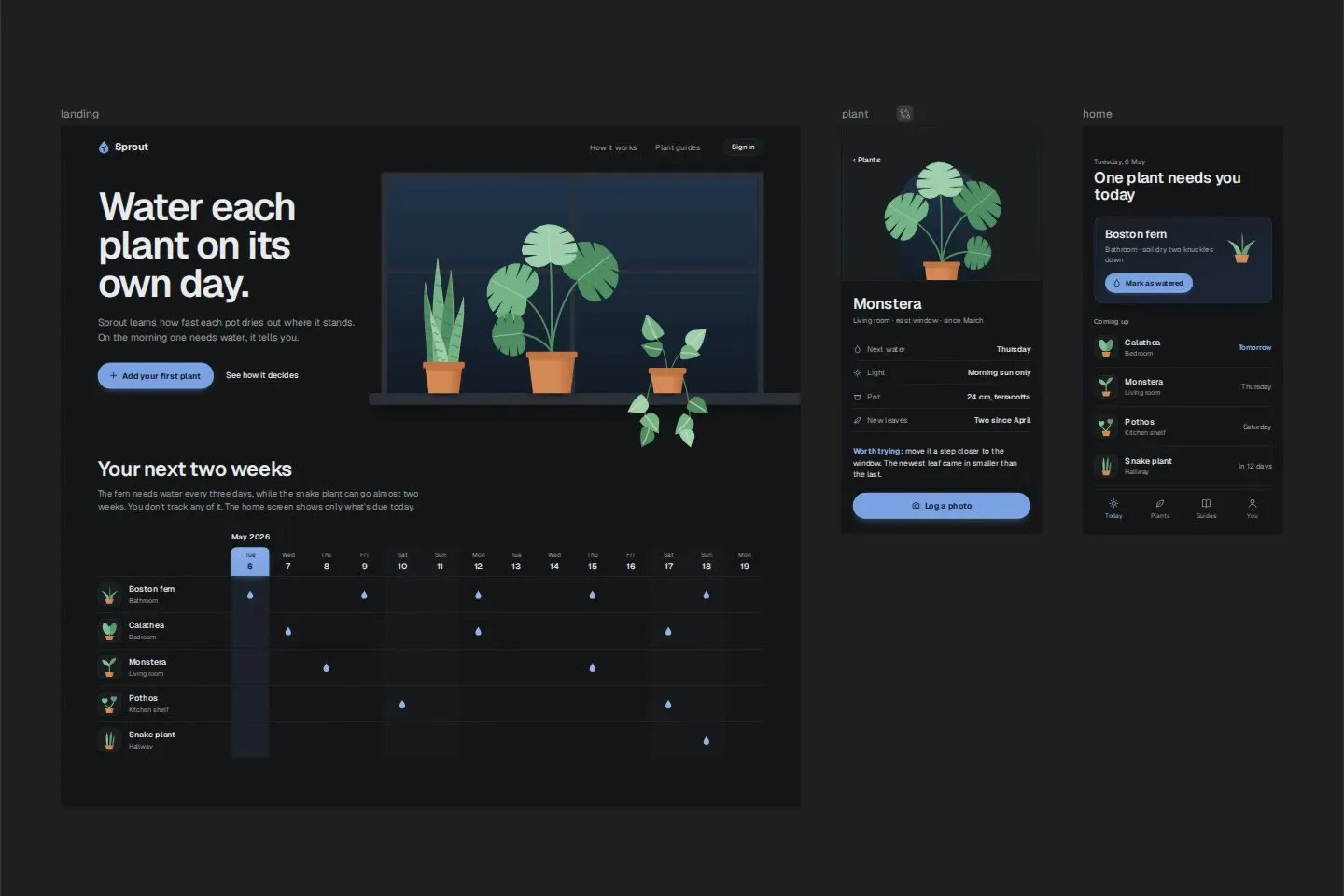
Every frame, in light and dark
Flip one frame or the whole board, and capture either theme as a PNG.
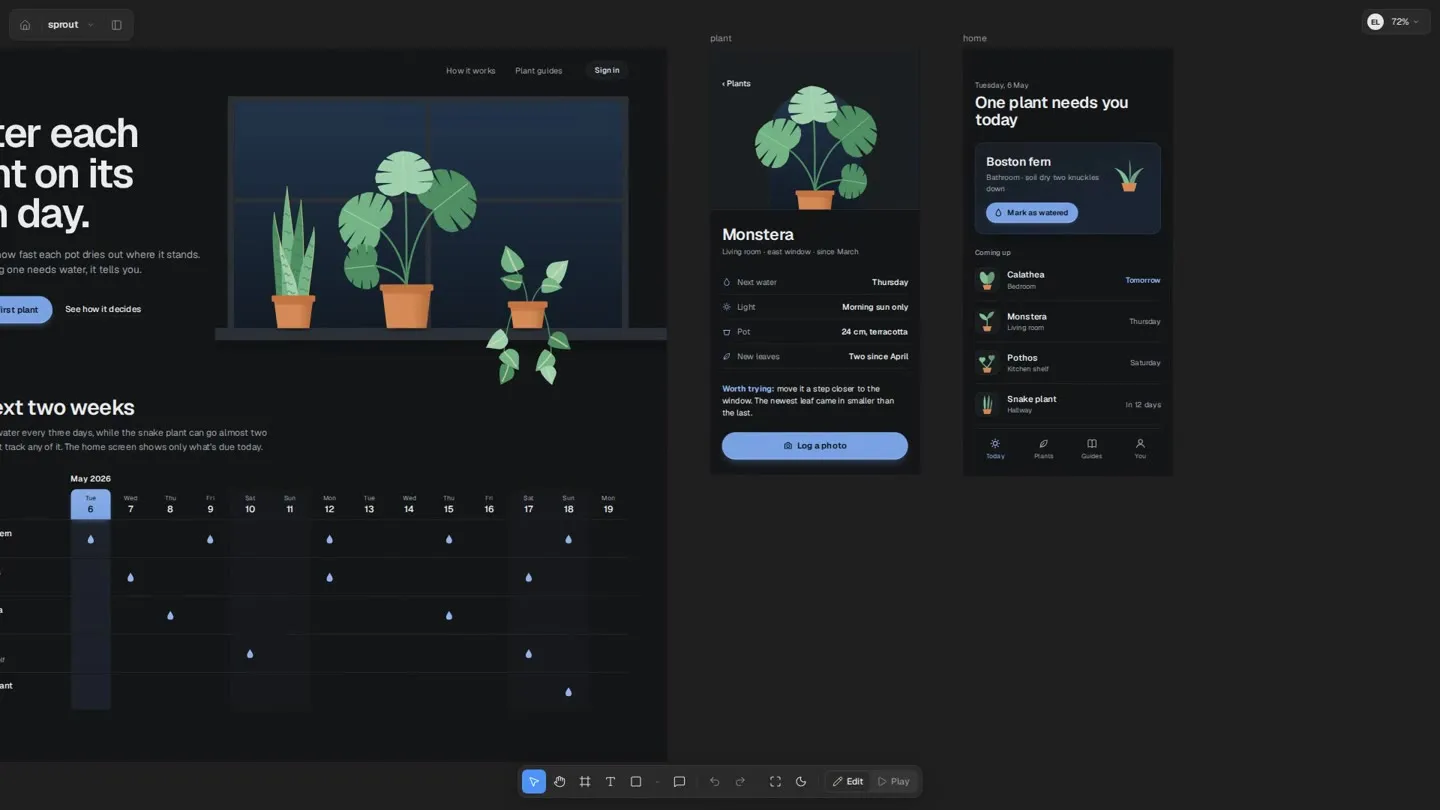
Built for an agent to run
Every command prints JSON on request, never stops to ask, and exits with a code an agent branches on.
- The check names the rule, the frame, and the element that broke it
- A Claude Code plugin checks each frame the agent writes and hands it your notes as they arrive
$ frameboard check sprout/app/home
sprout/app/home.html  clipped  sprout/app/home is 442 px wide in its 390 px width, so the board cuts it off, <div> at element 8 first past the box and 1 more element is. Reflow or shorten the content to fit its 390 px width, since frame fit sets the height alone.
frameboard: Checked 1 frame, 1 finding.

# the agent narrows the list and writes the frame again

$ frameboard check sprout/app/home
Checked 1 frame, no findings.
Start a board in an empty folder
Runs on macOS and Linux, with Node 22 or later or with Bun.
- No account
- No hosted service or MCP server
- Any folder, with or without git
- MIT licensed
npx frameboard serve